
Negar Safara Nosar defends her PhD thesis
Negar Safara Nosar will defend her PhD at Western Norway University of Applied Sciences (HVL) on 30 November 2026 with the thesis «Energy hub ports as innovation junction».
Every port is a meeting point. Distinct systems exchange resources and share infrastructure there, so when one begins to transition, the systems connected to it are pulled along. Such nodes can therefore play a decisive role in accelerating transitions across multiple systems at once. This thesis asks how certain places come to play that role. And what happens when several climate-friendly technologies develop together, in the same place, to serve many users?
Ports as energy hubs
Energy hub ports adopt low-carbon technologies, including climate-friendly hydrogen and carbon capture and storage. They do this not only to decarbonise their own activities and services, but also to supply nearby sectors. In this way, several distinct systems move in a coordinated manner towards shared solutions, forming a site-specific multisystem complex.
Ports of all sizes are increasingly encouraged to become energy hubs. Yet research on multisystem transitions has largely overlooked the role of geography, and research on port transitions has mainly overlooked small and medium-sized ports. This thesis addresses both gaps.
The thesis conceptualises site-specific multisystem complexes as innovation junctions, which brings the spatial dimension of their formation and transition to the foreground. It asks: how does geography explain divergence in multisystem transitions at innovation junctions?
The thesis's findings
The thesis is article-based and consists of a summary part and three papers. It draws on qualitative data from the transition of two Norwegian small and medium-sized industrial ports to energy hubs: Coast Centre Base (CCB) and Port of Borg (BIKS). As energy hubs, both ports form new interactions with interconnected systems by supplying climate-friendly fuels and adopting low-carbon technologies. They meet their environmental commitments and diversify their services at the same time.
The thesis offers detailed, site-level insight into the geographical dimensions of multisystem transitions, and into how innovation junctions emerge, expand, face contradictions, and decline. It shows that the meta-rule entangles systems and redistributes power among those whose materiality, actors, and institutions resonate most closely with it.
In the early phase, interactions between systems in spatial proximity are ad hoc, loosely coupled, and often marked by conflict. Where the meta-rule is maintained and reinforced over time, it can ease these early challenges, sustain the innovation junction, and accelerate transition across distinct systems.
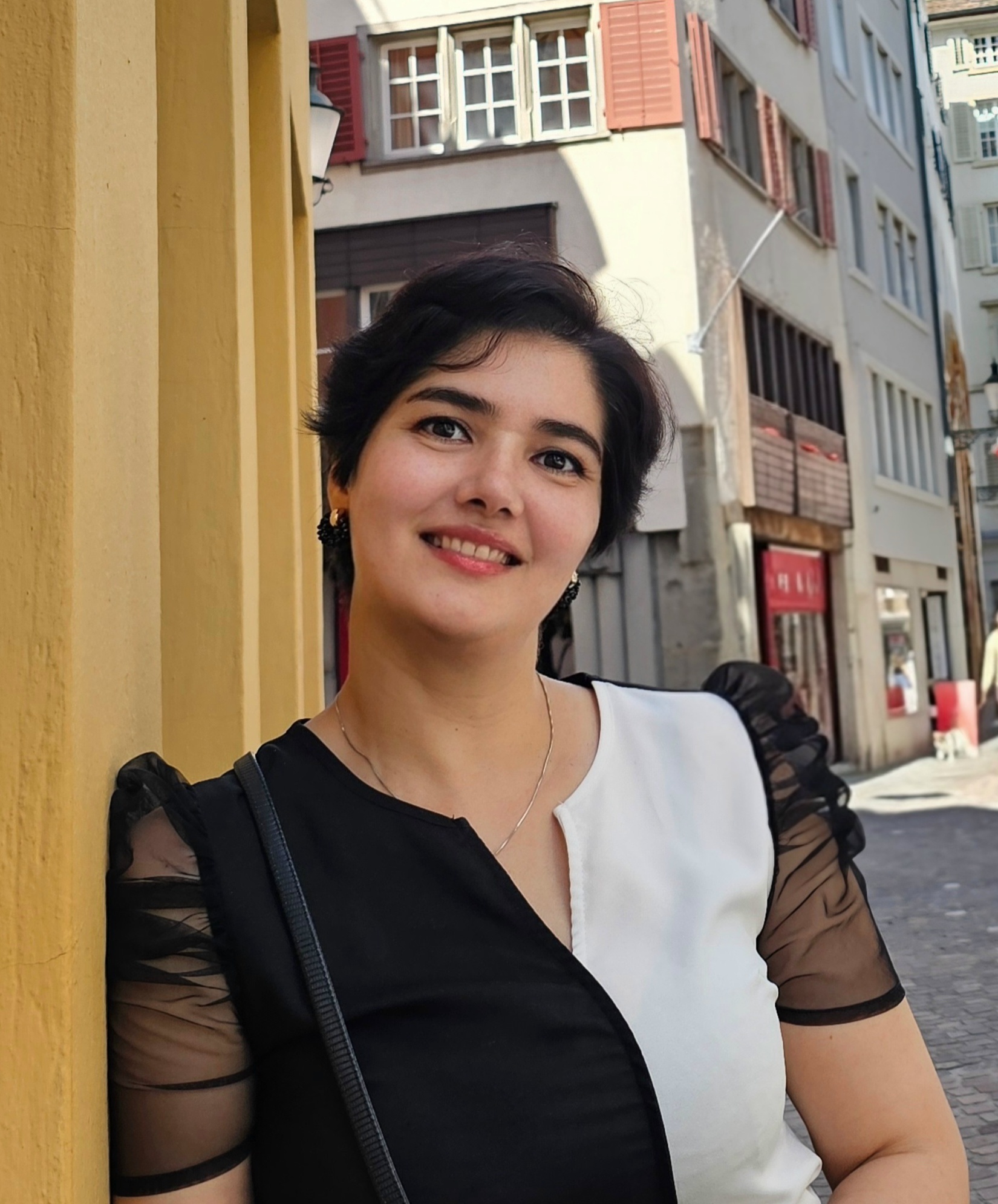
Biography
Negar Safara Nosar has a background in civil and transportation engineering. She holds a bachelor's degree in civil engineering from the University of Mazandaran and a master's degree in transportation engineering from Shomal University in Iran. She also holds a master's degree in climate change management from HVL in Sogndal.
Negar began her doctoral studies in January 2022 in Responsible Innovation and Regional Development (RESINNREG), and she is affiliated with the FME NTRANS. She has presented her research at more than 8 national and international conferences, with policy and industry stakeholders among the audiences.
Negar works as a university lecturer at HVL, where she teaches and supervises in renewable energy and climate change management.
Trial lecture
The trial lecture takes place on 30 November 2026 at 08:15 at HVL, Sogndal, Storen.
Topic:
“Places for multisystemic and multi-scalar interactions in transition- Metarules, regimes and niches in innovation Junctions?“
Doctoral defence
The defence takes place on 30 November at 12.15 at HVL, Sogndal, Storen.
Title of the thesis:
«Energy hub ports as innovation junctions»
Streaming
Assessment committee
Committee chair
Svein Gunnar Sjøtun, HVL
Opponents
Hanna Martin, University of Gothenburg
Tuukka Mäkitie, SINTEF Digital
Supervisors
Associate Professor Bente Johnsen Rygg, Western Norway University of Applied Sciences (main supervisor)
Associate Professor Ridvan Cinar, Western Norway University of Applied Sciences
Professor Ole Andreas Brekke, Western Norway University of Applied Sciences
Chair of the defence
Roger Normann