

Promoting community support for mental health
For a person beginning to struggle with mental health issues, help on an individual level is often insufficient. A major European research project led from Førde in Norway will look into how communities can become the driving force for a better life.
“You know the type of joy that comes from doing things together? Like participating in a campus variety show, a collaborative project that really flows, or a volleyball team?” asks Christian Moltu.
“It’s the feeling of being part of something larger than yourself. These are some of the most rewarding experiences a person can have!”
Moltu is a researcher at Western Norway University of Applied Sciences (HVL) and Førde Hospital Trust. Recently, his team and partners from eight European countries were awarded funding for a large research project. It is called Together for Mental Health (Together4MH).
As one of three projects selected from a list of 77 applications, they made it through the eye of the needle and will receive around five million euro in funding from the EU programme Horizon Europe. HVL and Førde Hospital Trust have developed the project together, and HVL will be leading it.
In the coming years, Moltu and a number of other researchers and professionals from Norway, Finland, Belgium, the United Kingdom, the Czech Republic, Denmark, Sweden and Spain will work together to make life better and safer for young Europeans.
Vulnerable transitions in life
Young people are the main target group for the project, as the life phases they go through make them particularly vulnerable to mental health problems. Early periods of life are characterised by frequent and major transitions: for example, from lower secondary to upper secondary school, from school to higher education, and from school or higher education to working life – just to name a few.
“What we know psychologically is that habit and structure protect us very much in our everyday life. That’s why the risk of being marginalized becomes especially high during transitions,” says Moltu.
“If you are left behind while life moves on for your peers, finding your way within new structures becomes much more demanding. The loneliness you feel then can become acute.”
Life happens fast in teenage and young adult years. If you’re away from school for a period, your fellow pupils will in the meantime have had a wealth of new experiences together: gone to parties, sat exams, learned new mathematical methods, fallen in love with each other and broken up again. Suddenly you feel left out of a shared story that keeps unfolding.
Traditional forms of community are crumbling
A few years ago, Moltu spoke with a research colleague who had studied the fates of youth clubs and community halls around Norway. These meeting places were at the heart of local life for most Norwegians in the 1970s, with their games and dances. Today, most of these venues are abandoned or rarely used.
This made Moltu reflect on how fragile our communities have become.
“We live in a society where young people are spending more and more of their time at home, on their screens,” says Moltu.
So what could be done to help the teenage boy who is starting to feel that life is difficult? Perhaps he hasn’t yet started cutting his arms or skipping school – but he has a gnawing sense that something isn’t right.
“If, already at that point, he felt there was a place he could go to – an environment where he could find support – then he might be saved from a very harmful path.”
We need to think bigger than before
For several years, Moltu has worked on health innovations designed to reach as many patients as possible, within an increasingly pressured healthcare system. Norse Impact, developed in collaboration with partners from the private sector, consists of digital tools aimed at patients with mental health challenges. They can use these on their own, for example while waiting to access treatment.
The EU, however, called for research with an even broader scope. “Scaling” is a key concept here – how to create new and more far‑reaching ways of safeguarding people’s mental health.
“We realised while developing our project that targeting help at the individual is rarely enough on its own,” says Moltu.
“If, for example, a school pupil gets help to manage her emerging anxiety, whereas her school is only concerned with national tests, then the seed of positive change may be crushed by much stronger pressures from the environment she is a part of,” says Moltu.
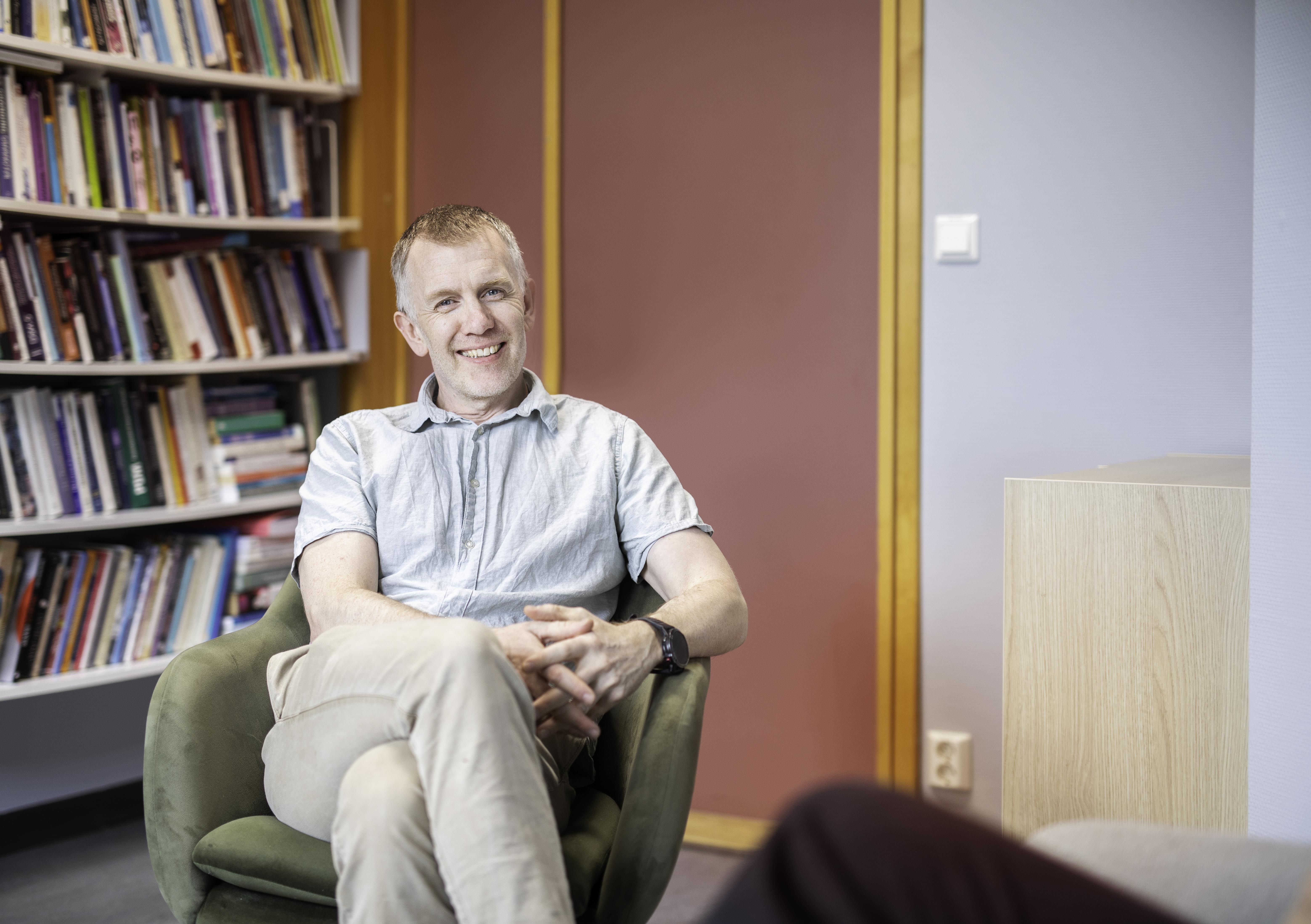
Together 4MH has been awarded several million euros from the EU, in a strong competition with established institutions from all over Europe. - This is a clear sign that our research has high relevance and impact, also internationally, says Moltu, who will lead the project. Photo: HVL/Ingvild Constance Festervoll Melien
No person is an island
Moltu realized that in addition to the vulnerable young individual, there is also a “we” that needs to be strengthened to better understand and care for those who are struggling. This was an unfamiliar way of thinking. With his background as a psychologist, Moltu has mostly focused his attention on people’s inner lives.
In this project, he and his partners will be working in completely different ways.
Through their networks, researchers in Førde have established collaborations with people in various countries and sectors of society. Schools and youth environments in Belgium, Finland and England are involved, as they have excelled at engaging young people. The Norwegian University of Science and Technology is involved because of its expertise in organisational psychology and working life. The Førde Hospital Trust is involved, as well as selected workplaces in Spain. Also participating is EuroAccident, a large Nordic insurance company with a special focus on fostering resilient employees.
“All of these institutions will serve as examples in our research, since they work in targeted ways to promote mental health,” says Moltu.
Developing and testing a toolbox
Each of these institutions holds its own knowledge about how to create a psychologically safe environment. Awareness about mental health needs to permeate every level: the individual, the work community and the leadership in an organisation.
Over the course of the next year, the partners will share their knowledge about how they work with strengthening mental health. Through this, they will develop a menu of different measures that can be implemented. Norse Impact is an important part of the toolbox, but the international community behind the project also has other tools and areas of expertise that the organisations will gain access to.
“Once we have this in place, the organisations will make use of these tools, and we will document the results. We hope to find evidence of which methods work particularly well. An indicator may for example be lower rates of sick leave,” says Moltu.
Afterwards, the partners in the project have each committed to spreading their methods to three new institutions.
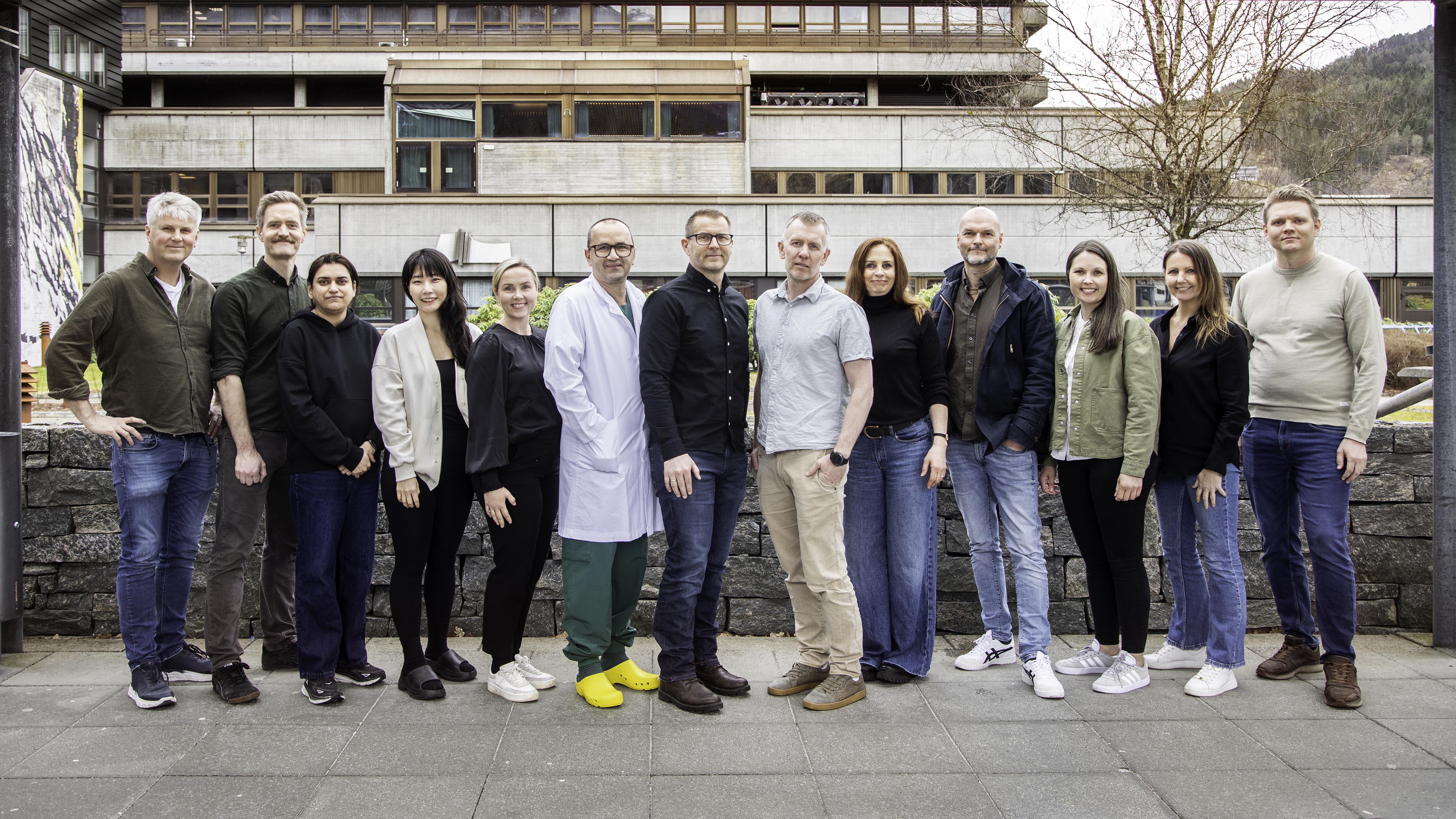
Christian Moltu and his research group, PERSONFORSK. This group combines research with innovation projects developed for the health sector. Photo: Ingvild Constance Festervoll Melien
Many tiny actions
So how exactly will it make a difference, when awareness of mental health permeates an entire organisation?
Through a series of tiny actions, Moltu believes:
“Loneliness and illness are closely connected,” he says.
“When you fall ill or become lonely, or both at once, it becomes difficult to speak of yourself to others.”
When a young girl, for example, reaches the point of developing an eating disorder, many small actions will already have contributed to creating a distance between herself and those around her.
Perhaps this girl gets so stressed about tests that she starts to shake. At some point she decides that she doesn’t dare to tell her friends about it, because she thinks they will find her strange or reject her. Ways of speaking, ways of being, things that are said or not said – all of this has contributed to making the environment around her unsafe.
Because she doesn’t voice this inner vulnerability, she also stops saying other things. The distance grows, and so does the loneliness.
“If we work on creating environments where people felt it was safe to be fully present with their whole selves, including their vulnerabilities, this girl would probably not withdraw from others. Consequently, she would probably not become ill,” says Moltu.
“These are the kinds of communities we want to build.”
About Horizon Europe
- The EU programme Horizon Europe is the world’s largest research and innovation programme.
- Western Norway University of Applied Sciences has a total of 25 Horizon Europe projects.
- Read more about HVL’s projects through Horizon Europe on this webpage.