

PROCARD – Patient-Reported Outcomes in Cardiology
The PROCARD research group is a leading force in generating research-based knowledge and implementation of competence within the clinical field of cardiac nursing.
Furthermore, we collaborate closely with a range of nationally and internationally recognized experts in both research projects and publications. This ensures that the research is rooted in current clinical issues and contributes with publications of high international quality to promote Western Norway University of Applied Sciences (HVL) as a professional and working life-oriented research institution.
The Patient-Reported Outcomes in Cardiology (PROCARD) research group was established in 2009 by Professor Tone M. Norekvål. The focus of this research group is related to the following main areas:
- Quality of life, self-reported physical and psychological health, health literacy, frailty, sleep, and delirium
- Adherence to lifestyle and treatment advice
- Satisfaction with the use of, and shared decision-making between healthcare services
- Healthcare personnel’s adherence to local and international guidelines
PROCARD investigates how patients experience continuity of care in primary and secondary healthcare services, and reasons for non-adherence to treatment advice. Many patients diagnosed with cardiovascular diseases (CVDs) are unable to reduce known risk factors for CVD, and many find themselves unable to reach treatment goals regarding physical activity, smoking cessation, blood pressure, or cholesterol levels.
PROCARD uses qualitative and quantitative methods, data from national health registries, and data from large national and international cohort studies to investigate how patients experience acute and critical illness, and how they live with CVD. Further, PROCARD performs systematic reviews and validates instruments for the collection of PROs. This forms the foundation for intervention studies that could later be used in patient treatment.
PROCARD strives to improve resource utilization and shared decision-making, as well as to reduce potential gaps between research and clinical practice. Our proximity to the clinical field ensures that our research is based on relevant clinical research questions.
Research activities
Ongoing research activities
Project Manager: Tone M. Norekvål
Postdoc: Trond Røed Pettersen
PhD Candidate: Kristin Johnsen Ramstad
Funding: Research Council of Norway, HelseVest, InnoMed
Previous research activities
.
Research group leader
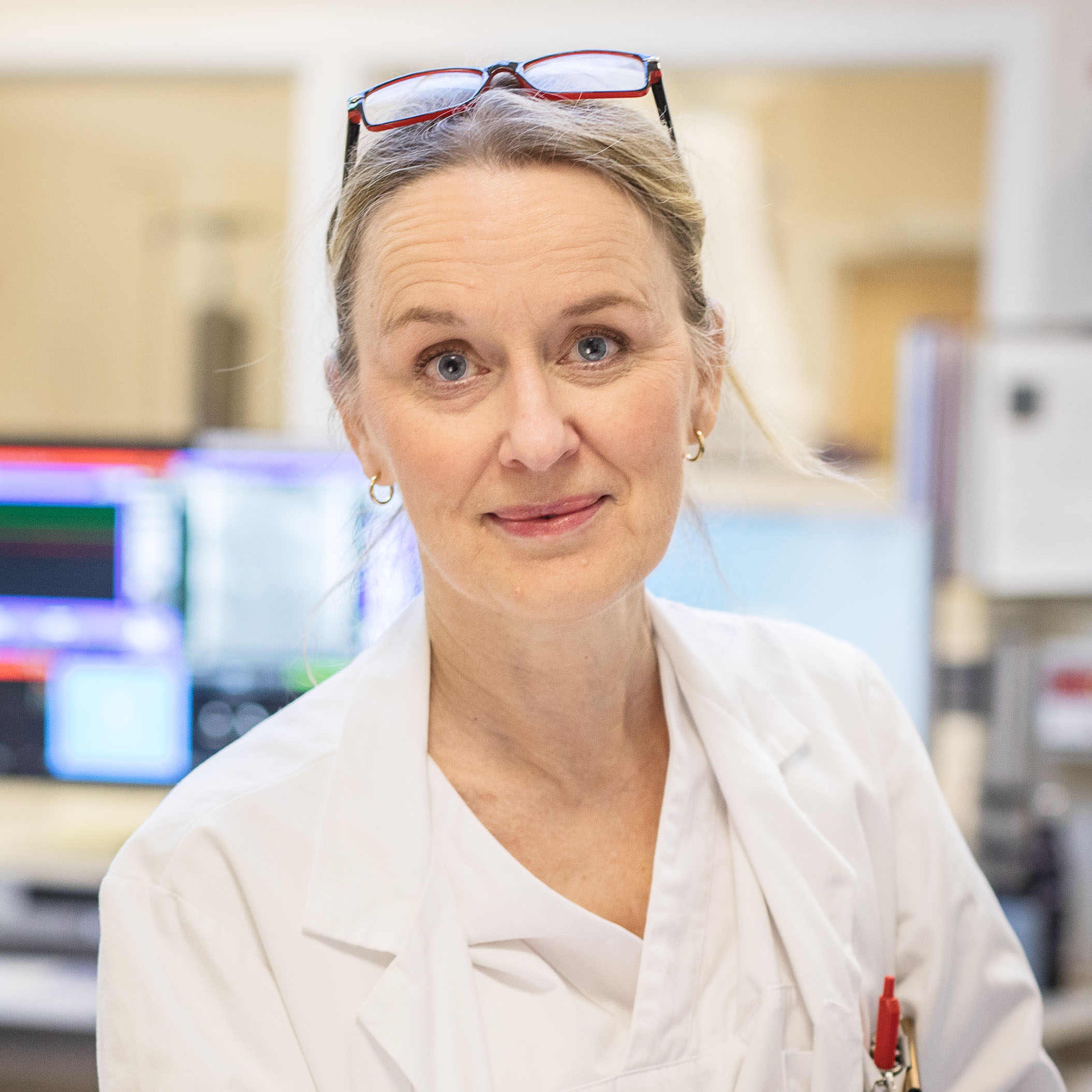
Research group members
Members
- Bengt Fridlund
- Nina Britt Fålun
- Nina Hjertvikrem
- Irene Instenes
- Oda Karin Nordfonn
- Trond Røed Pettersen
- Irene Valaker
- Sønneva Bergtun
- Irene Drotningsvik
- Astri Tafjord Frantzen
- Vilde Gloppestad
- Anne Åshild Herdlevær
- Isabel Lechner Krohn
- Daniel Madsen
- Lene Markhus
- Emma Mølmshaug Midthun
- Geir Atle Myrmoen
- Janne Nilsen
- Kaija Olsen
- Kristin Rykkje-Johannessen
- Eva Torsvik
- Elfrid Herre Staveland
PhD candidates
Associated members
National and regional partners
- Bjørn Bendz
- Cathrine Bjorvatn
- Alf Inge Larsen
- Jørund Langørgen
- Svein Rotevatn
- Jan Schøtt
- Tore Wentzel-Larsen
- Inger-Lise Aamot Aksetøy
- Eva Gerdts
- Trening som medisin
- Leonora Onarheim Bergsjø
- Christian Moltu
- Marjolein Iversen
- Tron Anders Moger
- Stig Igland
- Trude Fjeld
- Senter for forskning på hjertesykdom hos kvinner
- Youwell
- LHL Bergen
International partners
- Heather Allore, PhD, Yale School of Medicine
- Britt Borregaard, University of Southern Denmark
- Christi Deaton, University of Cambridge
- Heather Hadjistavropoulos, University of Regina
- Sandra Lauck, The University of British Columbia
- Phillip Moons, KU Leuven
- Pernille Palm, University of Copenhagen
- Trine Bernholdt Rasmussen, Copenhagen University Hospitals
- James Rudolph, Brown University
- David Thompson, Queen's University Belfast
- Ann Dorthe Olsen Zwisler, Copenhagen University
- Robyn Gallagher, University of Sydney
- Maria Bäck, Linköping University
- Anders Bostrøm, Jönköping University
- Dion Candelaria, The University of Sydney
- Kirsten Charlotte Hellmark, University of Southern Denmark
- Kristin Sandau, University of Minnesota
- Janet Vroomen-MacNeil, Amsterdam UMC