
Erlend Raa Vågset

Field of work
Researcher and educator in computer science and mathematics.
Computational pure mathematics:
I am interested in abstract mathematical structures, especially what happens when they become computational objects. My PhD work was at the intersection of computational topology and parameterized complexity theory, studying algorithmic problems arising fromdiscrete models of topological spaces. This included questions about computing global features of high-dimensional data, and about the boundary between computational hardness and fixed-parameter tractability. Although abstract and theoretical, these fields have growing connections to applications in areas such as data analysis, optimization and operations research, engineering, and medicine.
The broader programme is to understand how far this methodology can travel. Sometimes the connection is literal: algebraic objects can be given by generators and relations, logical systems by formulas and inference rules, games by rules and state spaces, and robots by local motion constraints and configuration spaces. Sometimes the connection is more conceptual: a formal deion does not by itself tell us what can be computed, proved, optimized, transformed, navigated, or shown to be inherently difficult. The same distinction matters in learning, where facts and definitions are important, but understanding grows through connecting, testing, using, and explaining ideas.
Democratic pedagogy, supervision and student research:
In my teaching, I try to create ways of working in which students think, investigate, and solve problems together. I am inspired by the traditions and philosophical ideas that have shaped modern democratic education, where Bildung, participation, community, responsibility, and freedom are central.
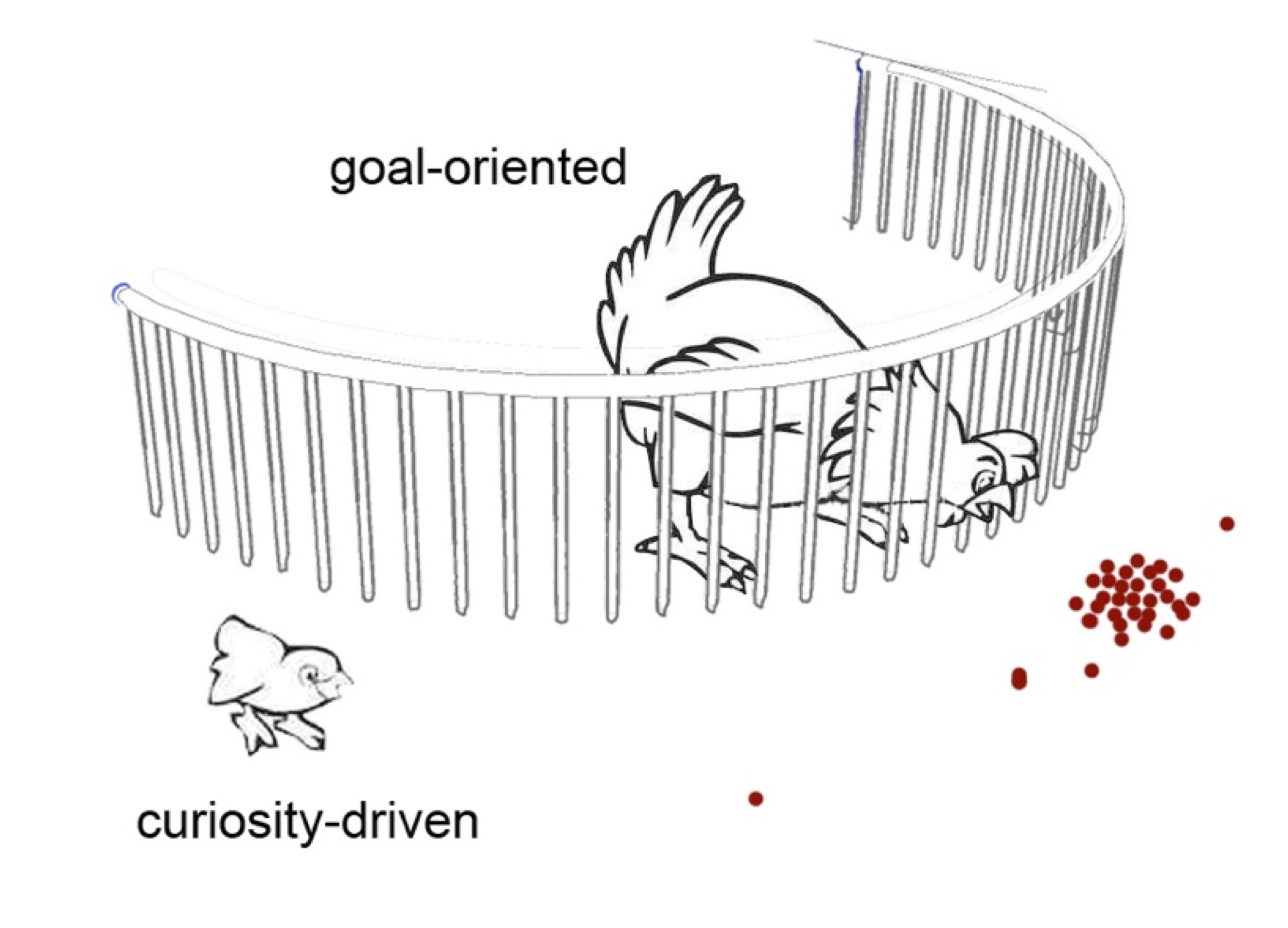
To me, student research sits at the intersection of research and democratic education. It often begins with something that has not yet become research: a game, a program, a teaching idea, or a question that does not quite let go. An example is my colaboration with Thobias Kvalvik Høivik, a BSc student who is now also my coauthor. His interest in "Paper Soccer" was the starting point. We followed it into questions about the computational complexity of games, and later into Edge Geography. The result is a paper answering a mathematical question raised more than 30 years ago, accepted for publication in the proceedings of ESA 2026. If you are a student with an idea, a question, or a small project you keep coming back to, I hope you will get in touch, even if you are not yet sure what it could become.
Publications
-
ETH-Tight Complexity of Optimal Morse Matching on Bounded-Treewidth Complexes
-
Students’ use of learning videos
-
Homology localization through the looking-glass of parameterized complexity theory
-
Optimal Parameterized Algorithms for Solving NP-Hard Problems in Topology
-
The parameterized complexity of finding minimum bounded chains