

HVL to lead EU project that will motivate young people to ask questions
The research project CIVIC STAGE aims to strengthen democratic citizenship among young people. New methods for learning will be tested on 3,200 young people in 11 different countries. Through training of teachers, the methods will be able to live on, influence curricula and be used throughout Europe.
CIVIC STAGE (Citizenship, Identity, European Values, Inclusion, and Community development through Societal Participatory Theatre Activities in a Global Europe) aims to strengthen young people’s knowledge, skills and attitudes so that they more actively can take part in society.
Western Norway University of Applied Sciences (Høgskulen på Vestlandet, HVL) is leading the project, which has received 3.5 million EURO from the EU’s research and innovation programme Horizon Europe. The project will start on 1 October 2026 and will run for three years.
With a goal to engage more young people in democracy
By empowering teachers, decision-makers and local communities, the project will create inclusive and democratic practices based on the EU’s values.
Traditional teaching does not always reach young people, particularly those with marginalised backgrounds. Therefore, the project will combine formal and informal learning with participatory theatre and digital tools to engage more young people in democracy.
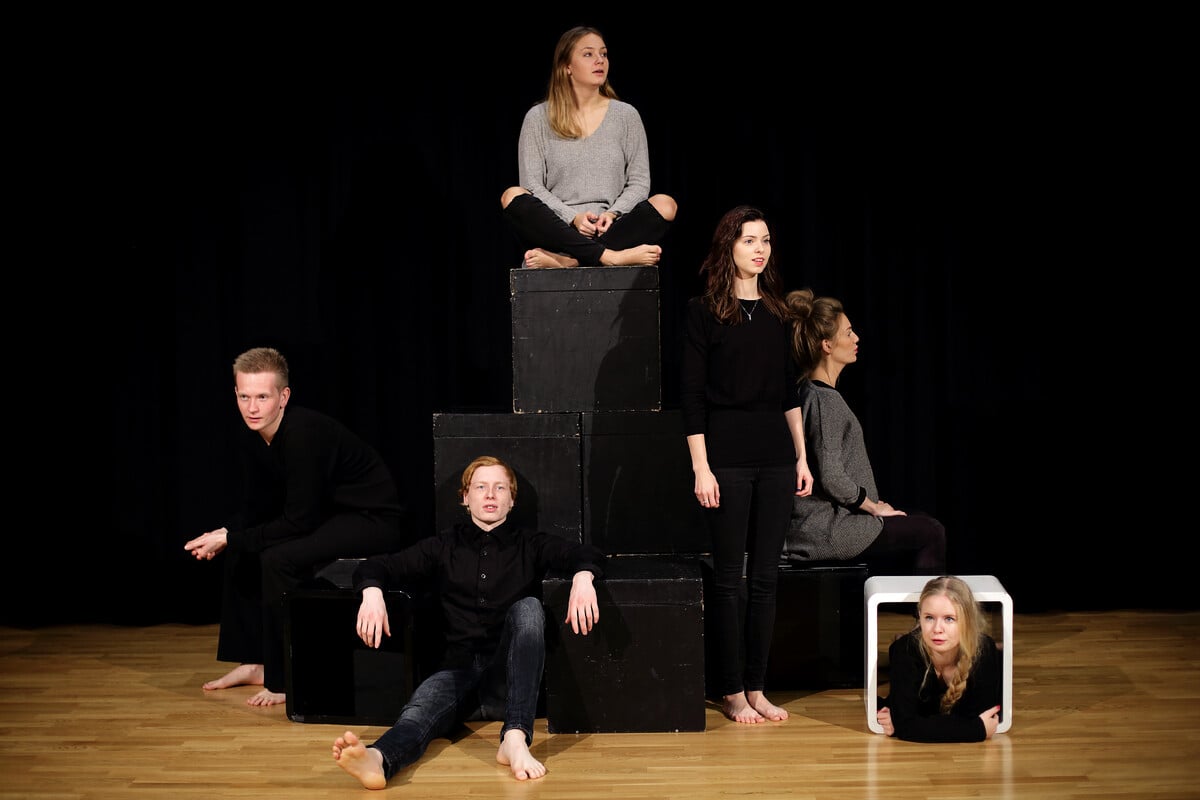
Students in the drama programme at the Faculty of Education, Arts and Sports. Photo: HVL / Mauricio Pavez
“We will investigate how participatory theatre can contribute to inclusion and active citizenship in Europe. The aim is to strengthen young people’s democratic competence and civic engagement, and to give them confidence that their experiences and voices matter. In this way, we build trust, ability to cooperate and critical reflection.”
So says the project leader and professor at HVL, Adam Cziboly.
Using drama and theatre to create social change
To achieve this, the project uses new, interdisciplinary and practical methods that can be adapted to different contexts. This will happen through close collaboration between research and teaching.
“We will develop eight different modules that shed light on how teachers can teach about democracy and citizenship. We will make sure that teachers and facilitators are able to take the methods further and share them across Europe.
The goal is that they are used actively and on a large scale,” says Cziboly.
The learning modules will make EU values such as democracy, equality and human rights concrete and relevant. The aim is to give young people real experience with democracy – not just as theory in a classroom, but as something they live, explore and influence.
The project combines participatory theatre and digital practices. Participatory theatre, where young people themselves are on stage, create stories, explore conflicts and “walk in others’ shoes”, and digital practices such as games, social media and AI-powered environments. These are important arenas for today’s democratic participation where young people are already involved politically and socially.
Europe needs renewal
The world and the EU are facing several new challenges. We are competing with simple messages in social media, artificial intelligence and its consequences, climate crises, changes in democracy, to name just a few.
Through participatory theatre, young people can explore democratic dilemmas, share their own experiences and develop empathy, critical thinking, creativity and belief in their own power to make a difference.
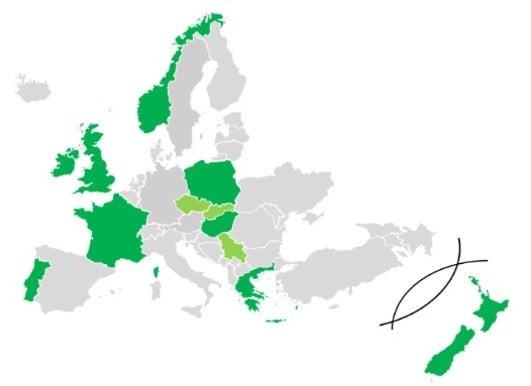
The project will be tested in around 160 groups with over 3,200 young people in 11 countries. In addition, teachers and facilitators will receive training. A “train-the-trainers model” provides a strong link between educational cooperation and research, in which students are involved.
“We want to counteract radical messages, which often offer simplified and emotionally charged answers to complex societal challenges. Participatory theatre also works through emotions and engagement, but at the same time opens up for exploring complexity, multiple perspectives and critical reflection.
Through the learning modules, we will strengthen participants’ ability to ask questions, deal with nuance and understand that complex problems rarely have simple solutions,” says Cziboly.
Collaboration with an international master’s programme
Western Norway University of Applied Sciences also has the coordinating responsibility for the Erasmus Mundus Joint Master programme Theatre SPACEs, a master’s programme focusing on theatre in social, participatory, community and educational contexts.
The master’s degree is offered by universities in Norway, Ireland, Romania, Germany and the Czech Republic, and gives students the opportunity to study in at least three countries. After completing the two-year programme (120 ECTS), graduates receive a joint degree from the partner universities. The programme is open to applicants from all over the world.
In September 2026, the programme will start at HVL’s campus in Bergen. Theatre SPACEs has received acceptances from 25 students from 21 different countries: the Philippines, China, Pakistan, India, Iran, North Macedonia, Hungary, Norway, Ireland, Germany, Switzerland, Italy, France, the United Kingdom, Brazil, the United States, the Democratic Republic of the Congo, Malawi, Ghana, Australia and New Zealand.
In the first year, the students will study in Bergen, then they will have their third semester in Romania, with summer school in Dublin.
“This autumn, we will welcome 25 outstanding students from around the world, at the same time as the Horizon project CIVIC STAGE is launched as a collaboration between 10 international partners.
We look forward to strong academic synergies between education, research and artistic development work,” says Cziboly.
More about CIVIC STAGE
- Professor Adam Cziboly will lead the research project together with Associate Professor Elin Thoresen, who is the internal coordinator.
- The EU Horizon project has received 3.5 million EURO over three years.
- The project is among the three selected out of 91 applications, with a score of 15 out of a possible 15 points.
- 10 partners from 9 countries.
- The project will collaborate with HVL’s international master’s programme Theatre SPACEs.
- List of partners: Western Norway University of Applied Sciences (coordinator), University of Auckland (New Zealand), Trinity College Dublin (Ireland), Royal Holloway, University of London (UK), International Drama/Theatre and Education Association (Portugal), Hellenic Theatre/Drama & Education Network (Greece), Citoyenneté Jeunesse (France), InSite Drama (Hungary), Regional Directorate of Education in Peloponnese (Greece), and Centre for Education Development (Poland).
- The project is based on a research design using Mixed Methods Research, which also includes arts-based research.
- Key results will include the training of at least 160 facilitators in 11 countries; piloting of participatory theatre combined with game-based digital practices in at least 160 groups with around 3,200 young participants; eight training modules; policy recommendations; and step-by-step toolkits for teachers and educators.
About Horizon Europe
- The EU programme Horizon Europe is the world’s largest research and innovation programme.
- Western Norway University of Applied Sciences has received a total of 25 Horizon Europe projects.
- Read more about HVL’s projects through Horizon Europe.