Summer School: Playful Experiments with Materials in Pedagogical Practices
Forskerskolen NORBARN tilbyr sommerskolen "Playful Experiments with Materials in Pedagogical Practices" 21-25.september 2026 ved Fana Folkehøyskole utenfor Bergen. Kursansvarlig på sommerskolen 2026 er Helle Marie Skovbjerg ved Kolding School of design. Sammen med Stine Ejsing-Duun, Julie Borup Jensen og Anne-Lene Sand vil studentene få en spennende og inspirerende sommerskole.
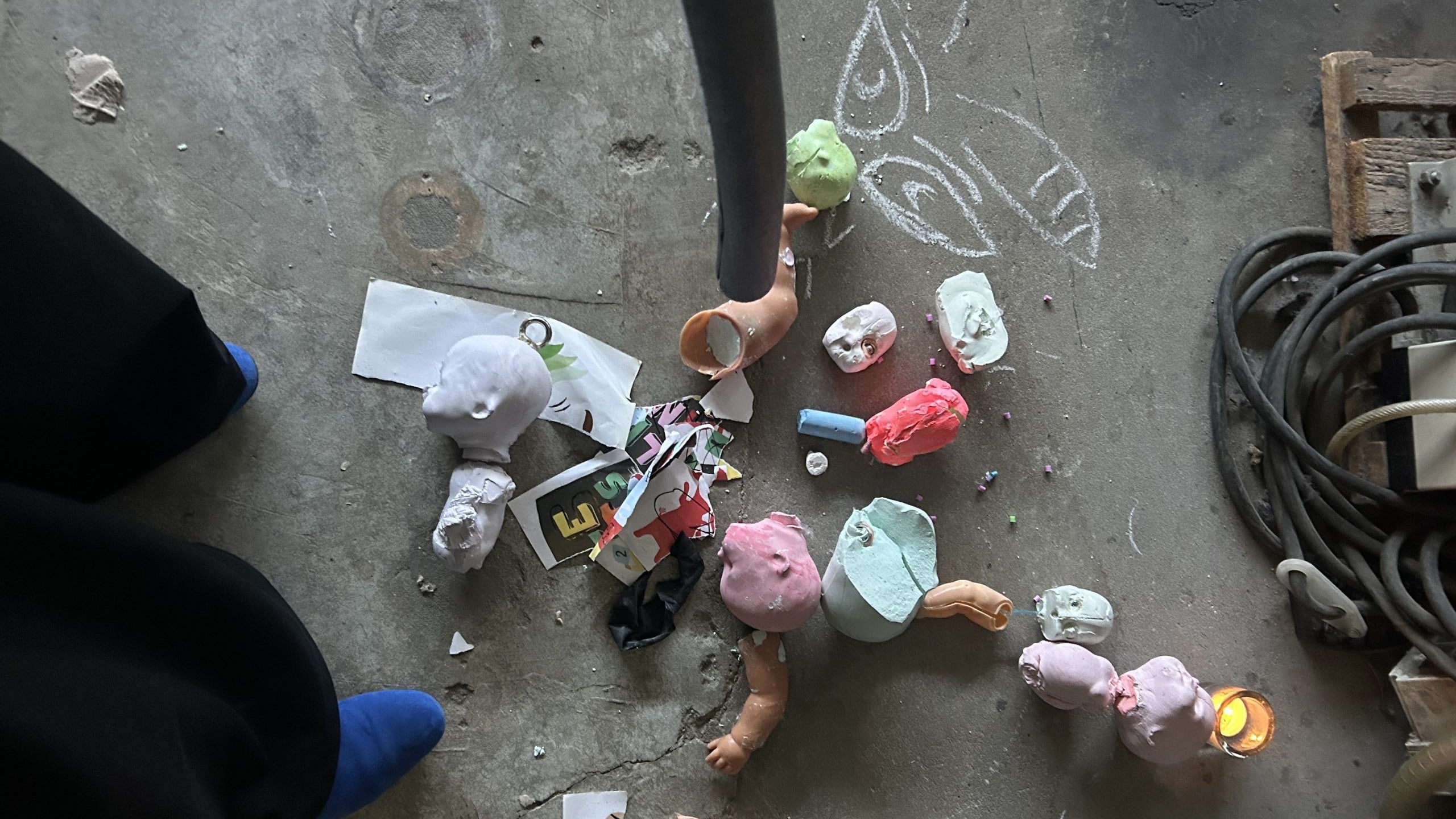 This PhD summer school explores the role of play qualities and materiality in experimental approaches to pedagogical practice. When conducting research and innovation in educational settings, experiments can become productive ways of generating knowledge in collaboration with practitioners. Throughout the programme, we will examine the uncertain and emergent nature of experiments by grounding them in play, design and learning theory, inviting participants to explore concepts such as sensory experience, relationality, qualities, and evaluation.
The summer school draws on recent literature on play quality, materiality, the nature of experimentation, sensory inquiry, and co‑creation. Building on this foundation, it proposes tentative methodologies that will be further explored through themes related to material practices, integrating reflective perspectives rooted in wonder, attentiveness, and care.
Content of the Summer School
The theoretical framing will lead into hands‑on methodological approaches and multimodal exercises—for example, conducting field notes through sensory and visual participation, prototyping play experiments, engaging in artifact‑based dialogues, playful writing, and creating annotated portfolios.
A significant part of the summer school will foreground stories of how materials matter in daycare educators’ developmental work and in children’s play and participation in peer communities. These stories will be connected to theoretical perspectives on the potential relationships between materials, metaphors, symbols, and play qualities.
PhD students will be invited to work through materials to create connections between their research questions and their methodological approaches, helping them articulate how play qualities may shape the outcomes of their projects. This might involve creating a tree, an avatar, or other metaphorical material forms that express aspects of their research and emerging insights.
As part of the collective work, we will also establish a material library, where participants curate, share, and document materials used in their experiments. This evolving collection will serve as both a learning resource during the summer school and a potential contribution to a shared material bank for future pedagogical and research practices.
Finally, the summer school will open space for meta‑reflections on the ontological and epistemological implications of working with these methods, enabling participants to integrate them meaningfully into their own PhD projects.
Requirements for Participation
Participation in the summer school requires full-time, in‑person attendance for all five days. Because the program is designed as an intensive, collaborative learning environment, participants are expected to be fully present without external commitments or digital distractions during the sessions. The group will work closely together throughout the week, and to support this collective focus, a high degree of engagement, openness, and willingness to contribute to shared discussions and activities is essential.
The summer school takes place at a folkehøyskole, which means the physical setting will be simple, informal, and community‑oriented. Participants should be prepared for modest accommodations and an everyday life shaped by communal meals, shared spaces, and an atmosphere that encourages immersion, reflection, and conversation. This environment is intentional and considered a central part of the learning experience.
The PhD summer School will admin 10-15 national and international students. The lectures and activities will be in English.
Details about program, preparation and reading list will be available on end June 2026.
To apply, participants must submit:
A one‑page application
This should include:
- A brief motivation for attending the summer school
- A reflection on the relevance of the summer school for the participant’s current project (e.g., PhD project, artistic work, research trajectory, etc.)
The reflection should make clear how the themes of the summer school relate to the applicant’s interests and how they expect to benefit from the week.
A recommendation letter from the applicant’s supervisor
The letter should confirm the relevance of the summer school for the applicant’s work and support their participation.
Both documents should be submitted in the application link (NORBARN members) or by email: norbarn@hvl.no
For external participants, please push here for registration
Application deadline: June 30, 2026
Accomodation / Kost og losji
Sommerskolen vil finne sted rett utenfor Bergen, på Fana Folkehøgskole.
Adresse: Mildevegen 190, 5259 Hjellestad.
Medlemmer av forskerskolen NORBARN, vil få dekket kursavgift, kost og losji på sommerskolen.
For eksterne deltakere vil sommerskolen ha en kostnad på 10 000 kr pr. person som dekker kursavgift, kost (tre måltider), snacks, samt overnatting alle dager.
Facilitators
Responsible:
Professor Helle Marie Skovbjerg, Kolding School of Design. Denmark.
Facilitated by
Professor Helle Marie Skovbjerg, Kolding School of Design, hms@dskd.dk
Professor Julie Borup Jensen, Aalborg University, jbjen@ikk.aau.dk
Associate Professor Stine Ejsing-Duun, Aalborg University, sed@plan.aau.dk
About the facilitators
Julie Borup Jensen is professor in organizational change through creative, aesthetic, and playful processes at Aalborg University, Department of Culture and Communication. She is the head of the research group Collaborative Organizational Learning (CO-LEARN). Her research focuses on co-creative approaches to play in teaching and learning designs at all levels in education, with special emphasis on professional development of teachers, educators, and facilitators of play. She has worked as PI and Co-PI at several professional development-projects in the public sector in Denmark with a focus on creativity and organizational learning.
Stine Ejsing‑Duun is Associate Professor and Co‑Leader of the research group PBL MATTER (PBL, MATeriality and Technology in Engineering education Research) at the Aalborg UNESCO PBL Centre. Her research examines how materiality, technological practices, and aesthetic experiences shape learning in education. She has published widely on design thinking, technological literacy, computational thinking, and aesthetic learning processes across K‑12 and higher education. She has driven research efforts in educational research projects with a focus on how teachers, students, technologies, and materials co‑construct meaningful learning.